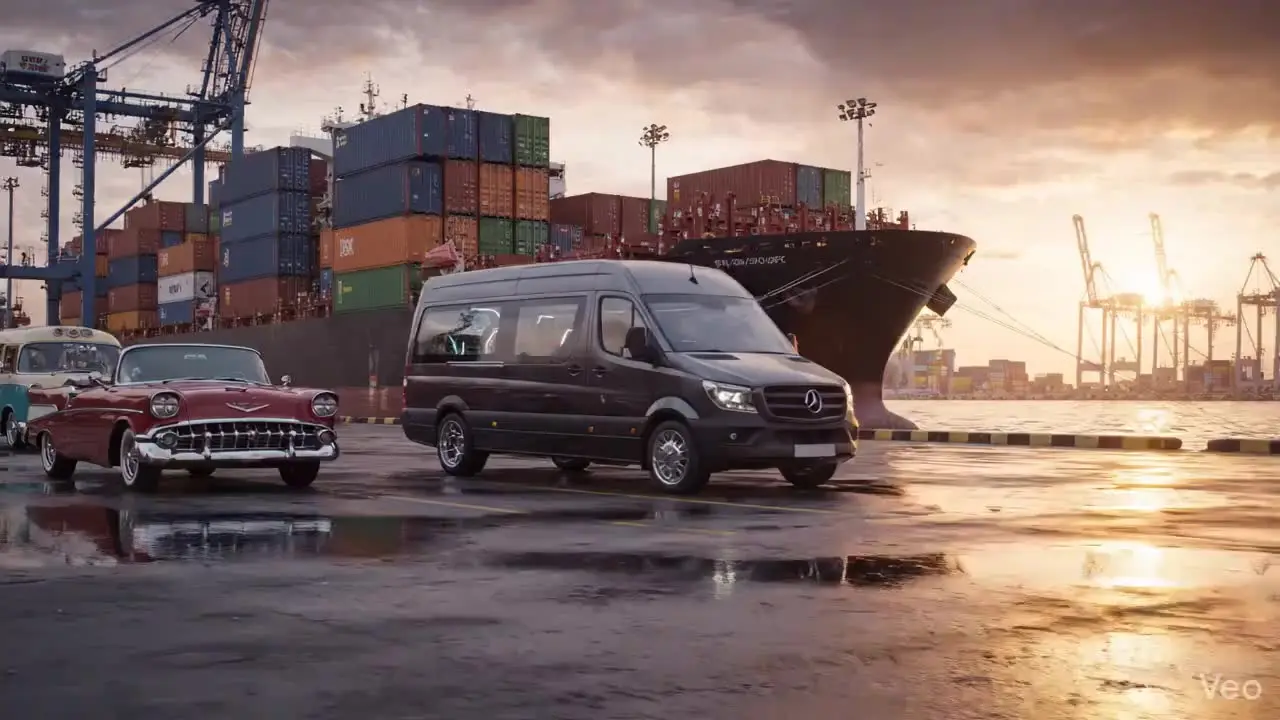
In short: trends generate enquiries, but only a checklist turns them into orders
When an international sporting event approaches, a city tourism landmark opens, or classic car culture dominates the news cycle, demand for mobile food vehicles, sightseeing shuttles, site vehicles and protocol cars concentrates within a few weeks. These are rarely orders for a standard vehicle. They are orders for a particular vehicle in a particular city, for a particular operating scenario.
For Chinese exporters, attention is valuable traffic, but it also amplifies three risks: buyers assuming the angle they saw is the configuration that can be delivered, buyers assuming exportability equals registrability, and buyers assuming handover is the end of the project. This article breaks the trend scenarios into a verifiable procurement order that overseas dealers, fleet buyers and private buyers can confirm item by item before paying.
1. Which 2026 trends are creating custom vehicle demand
1. Event shuttles during international sporting competitions
During a major event, host cities need large volumes of temporary capacity in a short window: spectator shuttles, volunteer transport, sponsor hospitality and media transfers. The pattern is short duration, concentrated batch size and a very specific duty cycle.
Suitable models include multi-seat sightseeing vehicles, enclosed electric shuttles, site patrol vehicles and converted buses. What buyers actually need to confirm is whether the vehicles can arrive inside the event window, whether charging or refuelling matches the venue, whether LHD or RHD is required, and what the temporary import or event-specific permit path looks like.
2. Low-speed sightseeing vehicles driven by city tourism
Scenic areas, coastal promenades, theme parks and city sightseeing loops keep adding routes. Compared with combustion vehicles, low-speed electric sightseeing vehicles are often easier to authorise inside a controlled site, but “allowed inside the park” does not mean “allowed on public roads”. Classification, speed limits, lighting, seat belts, passenger capacity and right of way all need written confirmation from the local operator and the competent authority before purchase.
3. Mobile food and street-market economy still expanding
Food trucks, mobile coffee vehicles and mobile retail units are a textbook category: exportable from China, but difficult to register at destination. Food operations involve health plan review, commissary or support facilities, water and wastewater systems, and gas installation. The vehicle itself also involves structural and electrical safety after conversion. Buyers often discover after arrival that the local health department requires approved drawings before construction, which is why this knowledge base repeatedly stresses confirming the local process before freezing the drawings.
4. Classic car and heritage vehicle culture
Classic replicas, tourist carriages and wedding or protocol vehicles keep steady demand in several markets. The risk in these projects is not manufacturing. It is legal identity: whether a replica can be registered, which model year and emission standard it is assessed against, and whether commercial operation is permitted all differ by country.
5. EV export and battery documents as a permanent gate
Whenever a vehicle carries a lithium battery, shipping documentation becomes a project milestone: UN38.3, MSDS, dangerous-goods or non-dangerous-goods declaration, packing instructions and container loading photos. Trend-led orders usually have tight delivery windows, so incomplete documentation directly delays booking and sailing.
2. The standard verification order for a trend-led order
| Order | Gate | What to obtain | What not to assume |
|---|---|---|---|
| 1 | Operating scenario | Destination city, site type, daily operating hours, passenger or sales model | Do not treat in-site rules as public road rules |
| 2 | Local market entry | Written position from the authority on vehicle classification, registration path and operating permit | Do not treat exportability as registrability |
| 3 | Configuration freeze | Model, dimensions, LHD/RHD, battery and range, equipment list, drawing revision | Do not use photos of another SKU for this vehicle |
| 4 | Quotation boundary | FOB or CIF, port, sailing window, insurance, who bears duties and taxes | Do not present an FOB price as landed cost |
| 5 | Certification and documents | The destination country’s homologation document list and who issues each item | Do not assume factory documents equal destination approval |
| 6 | PDI and loading | Per-unit inspection record, photos, securing method, exception handling agreement | Do not treat handover as local approval |
| 7 | After-sales and parts | Warranty scope, wear-part list, freight responsibility and lead time for parts | Do not assume parts are available everywhere for a popular model |
Nine items every RFQ must state
An RFQ that allows same-day quotation covers at least: destination country and port, vehicle use, quantity, LHD or RHD, power type, FOB or CIF, whether local registration is required, expected delivery window, and whether third-party inspection is required.
For custom projects, add operating detail. Food trucks should describe power supply, gas, kitchen equipment and health permits. Sightseeing vehicles should describe route gradient, one-way distance and charging conditions. Golf carts should state whether they will be used on public roads, plus speed limits and passenger counts. Replicas should describe the exterior reference, chassis approach and registration target.
3. Frequently asked questions
How short can lead time be for a trend-led order?
Lead time is decided by three things together: production slot, document preparation and booking plus sailing. The more custom configuration changes, the longer the slot. If lithium battery documents are incomplete, booking cannot move forward. The practical approach is to state production, PDI, documents, booking window and expected sailing date separately inside the quotation validity period, instead of promising a single total number of days.
Can we ship first and complete local paperwork later?
Not recommended. Missing market-entry documents, health plan reviews or certification files usually require the actual vehicle drawings before submission. Shipping first transfers all the risk to the buyer, and the rework cost of changing configuration after arrival is far higher than confirming it beforehand.
How should a buyer choose between FOB and CIF?
FOB suits buyers who already have a reliable forwarder and want to control routing and insurance. CIF suits first-time buyers, or buyers who want the supplier to coordinate the main sea leg. Whichever term is used, calculate landed cost separately: duties, VAT, port charges, inland transport and registration fees all belong in the same sheet.
Can configuration still be changed after export?
Changes involving structure, electrical systems or gas installation usually cannot be completed cheaply at destination, and may invalidate approved drawings or certification already obtained. Anything that needs to change should be frozen before production and written into the contract annex.
Is small-batch customisation worth doing?
For small batches, the decisive factor is not unit price but per-unit compliance cost. When the same model is purchased repeatedly for the same market, certification and drawing investment can be amortised. A one-off single-unit project should carry compliance cost explicitly in the budget rather than absorbing a price increase later.
4. From trend to delivery: what to do next
If you are assessing an event, a scenic site or a city project, move in this order: confirm destination and operating scenario, lock vehicle classification and registration path, freeze configuration and quotation boundary, and only then discuss sailing schedule and payment terms.
To move faster, send the nine RFQ items above to our sales team. We will reply within one business day with the deliverable scope and the list of items the buyer must confirm locally.
Contact: sales@huajiame.com, WhatsApp +44 7754 837124. This article explains procurement process and is not a legal, tax or certification commitment. Final requirements must be confirmed in writing with the destination authority, the local importer and the certification body.